The peach and pear blossoms might have been a bit too optimistic, but I’m happy with the cold snap of this April weather. It was 28 on the mountain last night. A few hardy hummingbirds came early too, and we will take their feeders inside tonight so they can have a warm breakfast in the morning.
It will be hot enough soon enough, but this “legacy” chill gives me a few more days before I have to start mowing grass and watching for snakes again. Snakes have been on my mind while I’ve been excavating rocks from an old chimney that fell down several years ago.
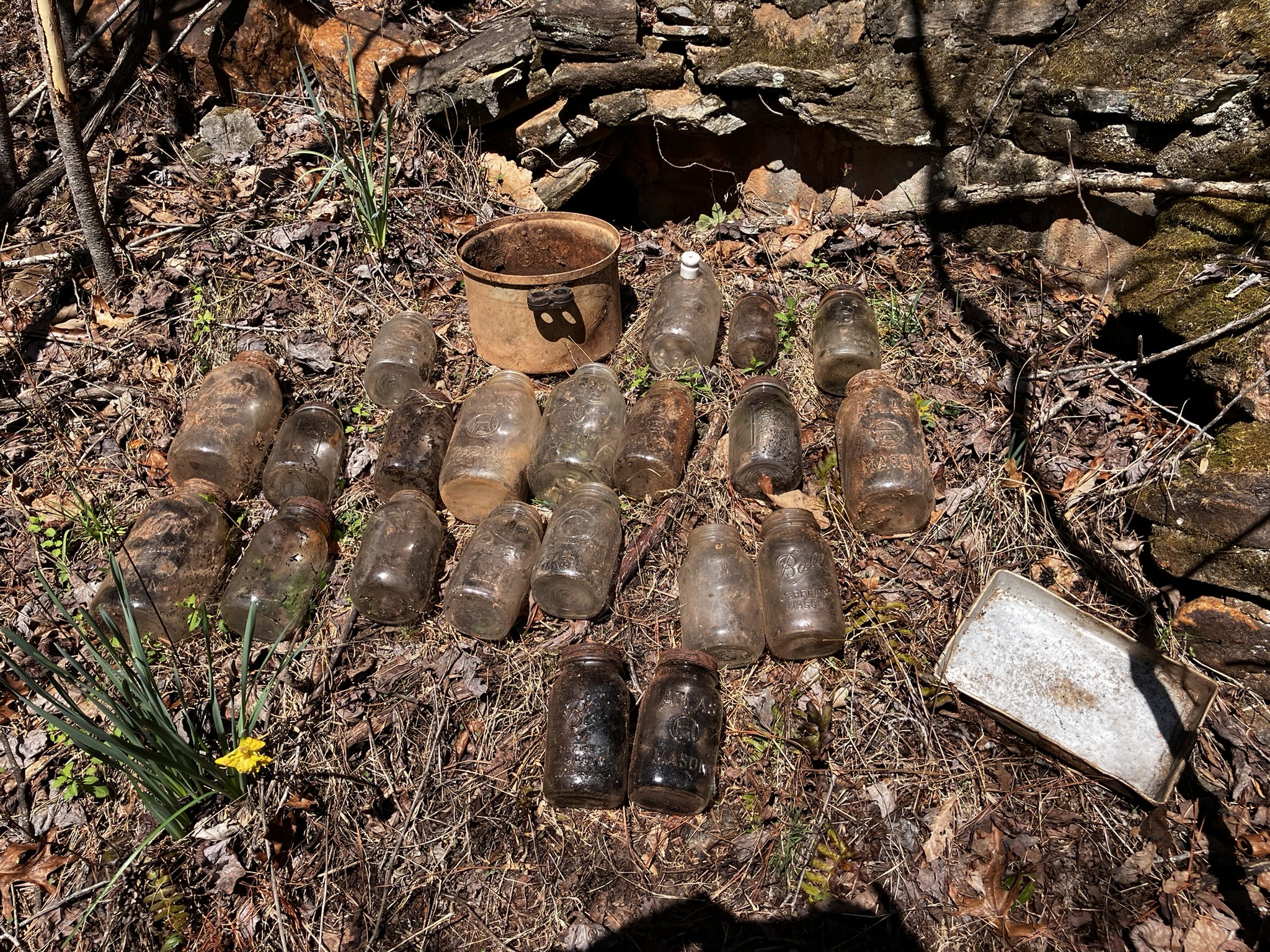
The rocks are all that remain of a cabin from the late 19th century world built by hand. They fell through the floor that covered a below-ground “can house,” a structure common in the days before refrigeration. The rocks destroyed and also preserved a lot of old canning jars under several tons of stone.
The cabin stood abandoned for many years like the ghosts of Americana that have all but disappeared from our area. It became the realm of dirt daubers, and enough red wasps and rattlesnakes to discourage pilferers from that class of people willing to steal something old from a place they consider abandoned. Over time we caught several black snakes and relocated them there to help evict the rattlers, and one of those grew long enough to span the single-lane road leading to the old homesite.
Every rock I load into the bucket of the front-end loader gives me pause to admire the strength and endurance of our ancestors who lived here long ago. There were no tractors to lighten the load, nor thousands of devout hands to distribute the weight of a pyramid or a cathedral. Every rock coaxed from the ground, loaded onto a wagon, and pulled behind a horse or mule was a personal challenge.
Before we became a retreat for those seeking leisure, this was a rugged frontier where pioneers guided by faith to follow their dreams carved out homes and livelihoods. What was once a land of ambition and survival has softened into a place of retirement, an escape for pausing rather than pushing forward. The ghost of the pioneering spirit remains—not in homesteads and hard work, but in the quiet embrace of legends and landscapes, and the memories of a hardy people who came here to forge new beginnings.
From a dark crevice between two large rocks, a reflection catches my eye. A careful shifting of stone reveals a half-gallon Ball Mason jar with a rusted lid that has survived the crush of the rocks intact. The jar brings back memories of my grandparents.
If you have ever pressure canned, you know the work involved. Imagine doing that without the benefit of a pressure cooker, using weighted blankets to hold down the lid in a process that took hours, not to mention the time involved in making the crop and harvesting it for canning. Now imagine that instead of preserving food as a hobby or to save money, you were doing it so your family had enough to eat through the winter.
These stories are not unique. They belong to every corner of the globe in times past and even today, where survival is personal and intimate without the intervention of technology and machines. But these are my rocks, and this is my story and my heritage, and I proudly share that heritage with many who will read this.
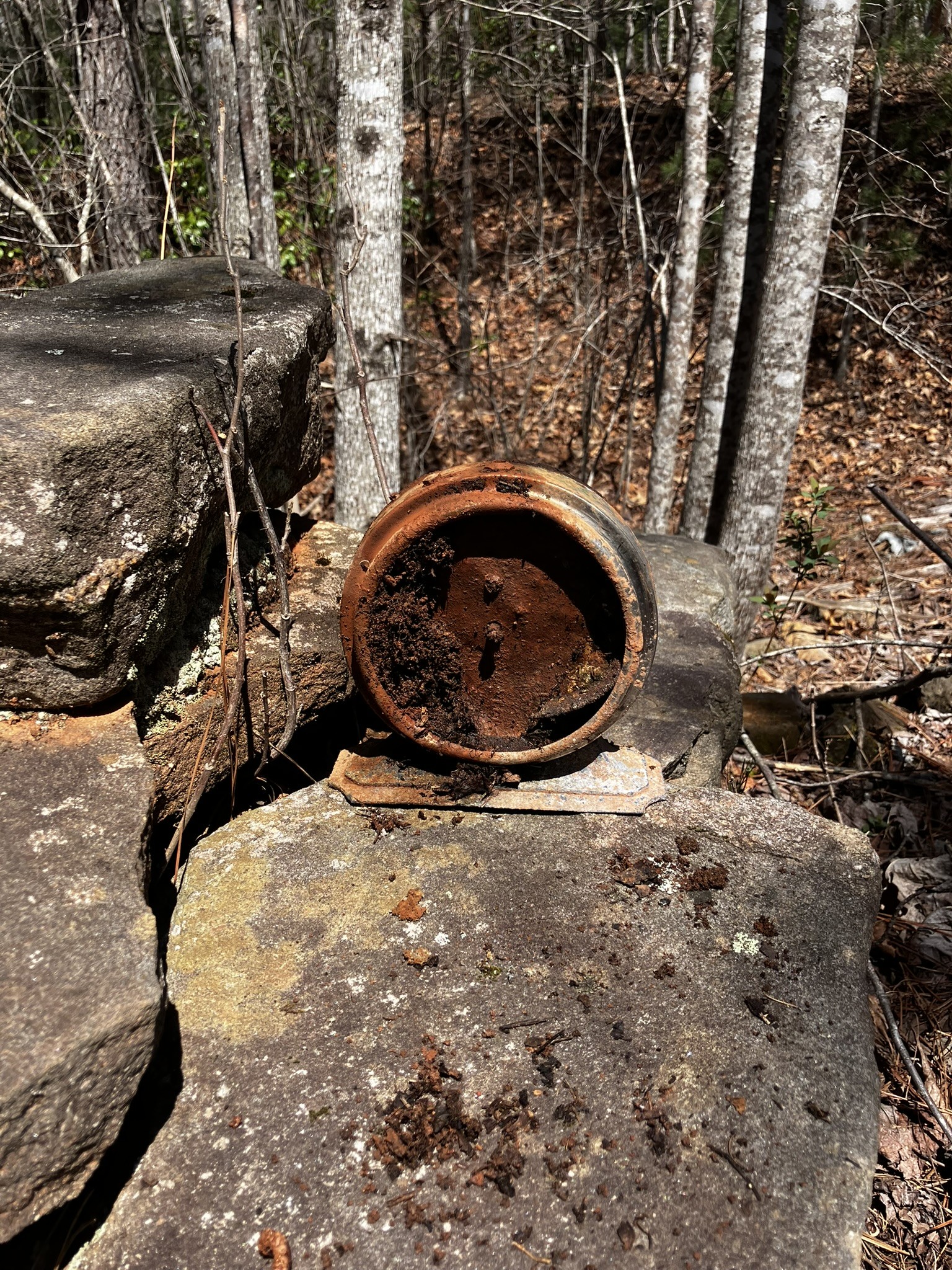
Something round and rusted rests behind another rock. It is the remains of an old wind-up clock that ran out of time many years ago. It is a fitting symbol of civilization and the cities that so many are now fleeing for a life less ruled by the sweep of the second hand that with every click of the escarpment slices off another bit of our time. The rust reminds me that even this metaphor feels antiquated in an era rushing into the future by fractions of seconds, guided by algorithms rather than faith.
But batteries die too, and the cutting-edge technology of last year is already rusting in a landfill. Chances are the rocks I wrestle today will still be here long after the boast of every modern Ozymandias has been forgotten. Perhaps someone else will pick them up again to build a new story.

 Outside The Box